Why Your Business Website Is Losing Potential Customers
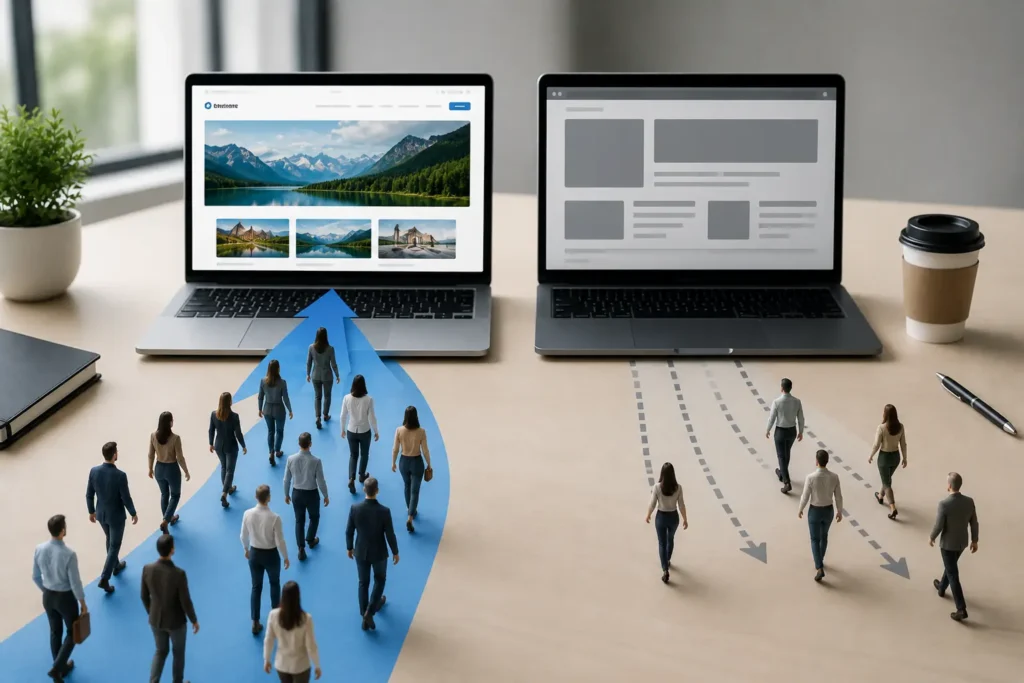
Your website is getting visitors. People are finding your business through Google, referrals, social media, and paid advertising. They’re exploring your services, spending time on your pages, and learning more about what you offer. Yet despite the traffic, enquiries remain lower than expected.
For many business owners, the first reaction is simple: we need more traffic. More SEO, more advertising, more content, or more social media activity. While visibility certainly matters, it isn’t always the reason enquiries are low.
After reviewing countless business websites, one pattern appears repeatedly. Many companies don’t have a traffic problem. They have a conversion problem.
The frustrating part is that many businesses keep investing in more traffic when the real problem is happening after people arrive.
This is one reason many businesses invest in custom web development services. The goal isn’t simply to build a website, but to create one that helps turn interest into enquiries.
Potential customers arrive with interest, but something in the experience prevents them from taking the next step. Understanding what those barriers are can help turn existing traffic into more enquiries without necessarily increasing visitor numbers.
The Real Reason Website Traffic Doesn’t Turn Into Enquiries
A common misconception is that website traffic automatically leads to business growth. In reality, traffic only creates opportunities. Whether those opportunities become enquiries depends on what people experience after they arrive.
Think about how people browse online. When someone lands on a website, they’re trying to answer a few questions quickly. Can this business help me? Do they understand my problem? Can I trust them? What should I do next?
Most people won’t spend several minutes searching for those answers. If they aren’t immediately obvious, they’ll continue their search elsewhere.
This is why many businesses experience the frustrating situation of getting traffic but no leads. Analytics may show users arriving every day, yet enquiry forms remain quiet. The numbers may look encouraging, but they aren’t producing meaningful business opportunities.
The difference between traffic and conversions is often the difference between an online presence that simply exists and one that actively supports growth.
The challenge is that these problems don’t always announce themselves clearly. Most websites leave clues long before business owners realise something is wrong. The question is whether you’re noticing them.
Your Website Is Already Showing These Signs
Many conversion problems don’t appear overnight. They develop gradually, making them easy to overlook. Fortunately, most websites leave clues that something isn’t working as it should.
People Leave Within Seconds
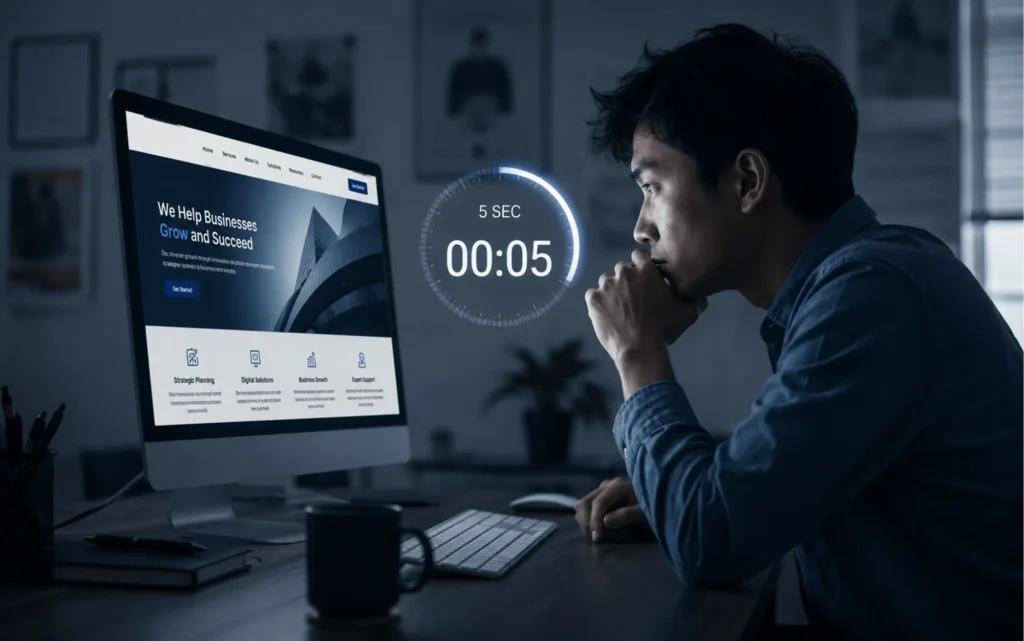
First impressions happen quickly. If people arrive and leave almost immediately, the message may not be communicating value clearly enough.
Confusing messaging, weak design, or a lack of relevance can all cause users to abandon the page before exploring further.
Service Pages Get Traffic But No Enquiries
This is one of the clearest signs of a conversion problem. Potential customers are finding your services and reading the content, but they’re not taking action.
In many cases, the issue isn’t visibility. The issue is that the page isn’t building enough confidence or providing a compelling reason to enquire.
Contact Forms Receive Very Few Submissions
Low enquiry numbers don’t always indicate low demand. Potential customers may be interested but still have unanswered questions or concerns.
When the website doesn’t address those concerns, users often leave without making contact.
People Browse Multiple Pages Without Taking Action
When users move between several pages before leaving, they’re usually searching for information they expected to find more easily.
The longer someone spends trying to understand a website, the more likely they are to abandon the process.
Mobile Users Leave Quickly
For many businesses, mobile users represent a significant percentage of website traffic.
Slow pages, difficult navigation, and poor mobile experiences can quickly frustrate visitors and reduce conversion opportunities.
These warning signs usually point to deeper issues beneath the surface. In many cases, the first problem appears before users have even had a chance to properly explore the website.
The First Impression Problem: People Still Don’t Know What You Do
One of the biggest mistakes businesses make is assuming people will take the time to figure things out for themselves. Most won’t.
People scan websites rather than reading every word, and within a few seconds they want to understand what the business does, who it helps, and why it’s relevant to them.
Many businesses try to sound impressive instead of being clear online. Generic headlines, vague marketing language, and broad statements about quality or innovation often fail to answer the visitor’s most important question: How can this business help me?
If the answer isn’t obvious, confusion replaces interest.
This problem becomes even more common when business owners write content from their own perspective rather than the customer’s perspective.
What seems obvious internally may be completely unclear to someone discovering the company for the first time.
A strong first impression isn’t about clever copywriting. It’s about helping users quickly understand they’ve found the right business. A headline like “Innovative Solutions For Modern Businesses” may sound professional, but it doesn’t tell people what the business actually does.
Understanding what your business does is only the first hurdle. The next challenge is helping people find the information they’re looking for quickly and easily.
People Can’t Buy What They Can’t Find
Even when potential customers understand what your business offers, they still need to find the information they’re looking for quickly. Unfortunately, many websites make that harder than it should be.
One common mistake is organising a website around internal thinking rather than customer needs. Business owners know exactly where everything is located because they’re familiar with how everything is organised. Potential customers don’t have that advantage. They’re simply looking for answers to a problem.
During website reviews, one common issue is finding important services buried behind confusing menus or difficult navigation paths. Many business owners don’t notice these issues because they already know where everything is. Someone discovering the business for the first time doesn’t have that advantage. If important information is difficult to find, people often leave before reaching the page that could have convinced them to make contact.
A well-structured site guides people naturally from one step to the next. It reduces confusion, shortens decision-making time, and helps them find the information they need without effort. Once they reach the right page, the content itself needs to answer the right questions.
Effective web development services focus on helping potential customers find information quickly rather than forcing them to search for it.
People Care More About Their Problems Than Your Business
During website reviews, one common pattern appears repeatedly. Businesses often spend more time explaining who they are than explaining how they solve customer problems.
They highlight company history, years of experience, awards, certifications, and internal processes before addressing the visitor’s actual problem.
The challenge is that most people arrive with one question in mind: Can this business help me? They aren’t looking for a company biography. They’re looking for a solution.
Experience and credibility are important, but they become far more valuable once people understand that you recognise their challenges and can help solve them.
Strong website content focuses on customer outcomes rather than company achievements. Instead of listing features, it explains benefits. Instead of talking about what the business does, it explains how those services help the customer achieve a specific result.
Even when someone finds the right information and feels confident in your services, uncertainty can still stop them from taking action. That’s where many websites lose opportunities they don’t even realise they had.
Every Click Should Lead Somewhere
Imagine a visitor reads an entire service page, finds the information helpful, and becomes interested in working with your business. Then they reach the bottom of the page and aren’t sure what to do next.
This happens more often than many businesses realise. We’ve seen websites where people reach the right page, understand the service, and still leave because the next step isn’t obvious. Service pages explain the offering, answer questions, and build interest, but they don’t provide a clear path forward.
A strong service page should never leave people guessing. Whether the next step is requesting a quote, booking a consultation, calling the business, or submitting an enquiry form, it should be obvious.
Clear calls-to-action don’t need to be aggressive. Their purpose is simply to guide potential customers toward the next stage of the decision-making process. When that guidance is missing, potential customers often postpone taking action or leave altogether.
Before most people contact a business, however, they need confidence that they’re making the right choice. That’s where trust becomes critical.
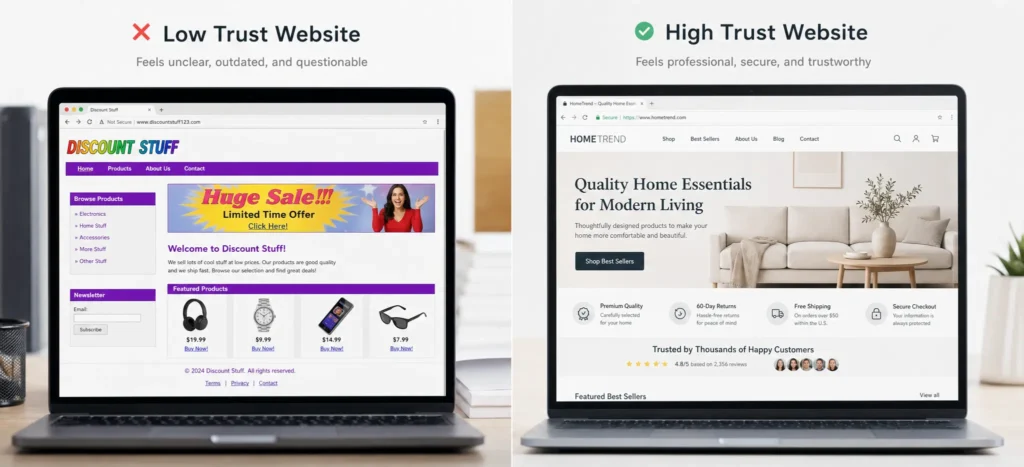
People Want Proof Before They Trust You
Trust is one of the biggest factors influencing whether someone becomes a customer. People may like what they find, understand your services, and even be interested in your offer. But without proof, hesitation often remains.
Think about your own behaviour online. Before buying a product, hiring a service provider, or booking an appointment, you probably look for reviews, testimonials, ratings, or examples of portfolio work.
Most people do exactly the same thing.
This is why trust signals matter. Testimonials, case studies, client feedback, and portfolio examples help reduce uncertainty. They provide evidence that other people have worked with your business and achieved positive outcomes.
Many businesses bury these elements on separate pages or make them difficult to find. High-performing websites place trust signals throughout the user journey, helping people feel more confident as they move closer to making a decision.
Trust helps people feel comfortable moving forward. However, trust alone isn’t enough if the experience itself becomes frustrating. Many businesses lose potential enquiries not because of what people think, but because of what they experience while using the website.
Slow Websites Lose Customers Faster Than You Think
Website speed affects far more than search rankings. It directly influences how people experience your business.
Most people expect websites to load quickly. Even a delay of a few seconds can be enough for someone to return to Google and continue their search elsewhere.
When pages take too long to appear, frustration begins almost immediately. Some people wait a few seconds. Others leave before the page finishes loading.
The impact goes beyond speed alone. Slow-loading pages often feel less reliable, less professional, and more difficult to use. Users may never consciously identify the problem, but the experience still influences their decision.
Mobile users are particularly sensitive to performance issues. A website that feels acceptable on a desktop computer may become frustrating on a mobile device, especially when users are browsing on slower connections.
At this point, a pattern starts to emerge. Websites that generate consistent enquiries rarely succeed because of one big thing. They usually get a lot of small things right at the same time.
Why Some Websites Generate More Enquiries Than Others
If two businesses offer similar services, target the same audience, and receive a similar amount of traffic, why does one consistently generate more enquiries than the other?
The answer is rarely a single factor. High-performing websites tend to excel at several small things rather than one big thing. They make it easier for potential customers to understand the offer, find relevant information, build trust, and take action.
The businesses that consistently generate enquiries are rarely accidental. They’re often the result of thoughtful planning, user-focused design, and strong custom web development services.
Remove Friction From The User Journey
Every unnecessary step creates an opportunity for people to leave. The easier it is to take action, the more likely someone is to complete it. Long forms, confusing navigation, excessive clicks, and complicated processes all increase friction.
High-converting websites simplify the journey. They remove unnecessary obstacles and make it easier for people to move from interest to action.
Most businesses underestimate how quickly small frustrations add up during the decision-making process.
Make Your Value Clear Immediately
People shouldn’t have to guess what a business does or who it helps. The faster people understand your relevance, the more likely they are to continue exploring the website. Strong websites communicate their value quickly and clearly.
Within a few seconds, users should understand the service being offered, the problem it solves, and why it’s relevant to them.
Guide Visitors To The Right Information
Not everyone is ready to contact a business immediately. Some need more information before making a decision.
Successful websites anticipate those needs and guide people toward relevant pages, resources, case studies, and supporting information. Instead of forcing potential customers to search, they help them move naturally through the decision-making process.
The goal isn’t to make people work harder to find answers. It’s to remove uncertainty before it becomes a reason to leave.
Build Trust Before Asking For Action
Many websites ask users to enquire before providing enough reasons to trust the business.
High-performing websites do the opposite. They establish credibility first through testimonials, case studies, reviews, expertise, and proof of results. Once confidence is established, asking users to take action becomes much easier.
Make The Next Step Obvious
One of the simplest ways to improve website conversions is to make the next step clear.
Potential customers should never reach the end of a page wondering what happens next. Whether it’s requesting a quote, booking a consultation, or contacting the business, the path forward should always be visible.
Create A Better Mobile Experience
Mobile users often represent a large percentage of website traffic, yet many websites still prioritise desktop experiences.
Successful websites are designed with mobile users in mind. They load quickly, remain easy to navigate, and make key actions simple to complete on smaller screens.
When these principles work together, the website becomes more than an online brochure. It becomes a tool that actively supports business growth. None of these improvements are particularly complicated on their own. The challenge is bringing them together in a way that creates a smooth experience from the first visit to the final enquiry.
How Strategic Web Development Supports Lead Generation
Many businesses invest in custom web development services to improve user journeys, increase conversions, and create a better experience for potential customers. While those things matter, effective web development goes much further.
A good web development company doesn’t just build pages. It helps businesses create websites that support lead generation and long-term growth.
Strategic custom web development focuses on how people interact with a business online. Every page, section, and customer journey is designed with a purpose. The goal isn’t simply to build pages, but to create an experience that helps people move toward a decision.
The most effective websites are designed around customer behaviour, not just design preferences.
Creates Clear User Journeys
People should always know where to go next. Strategic website planning removes confusion and creates logical pathways that help users find information, explore services, and take action.
Improves User Experience
A positive user experience reduces frustration and increases engagement. Simple navigation, clear layouts, and intuitive page structures make it easier for users to interact with the website.
Reduces Visitor Drop-Offs
Many potential customers leave because they encounter unnecessary obstacles. Better website structure, stronger messaging, and improved usability help reduce those drop-off points.
Increases Enquiry Opportunities
Every important page should support lead generation in some way. Whether through contact forms, consultation requests, or direct contact options, strategic web development creates more opportunities for visitors to engage with the business.
Supports Long-Term Business Growth
A website should continue supporting the business long after launch. As services evolve, traffic grows, and customer expectations change, a strong website provides a foundation that can adapt and scale over time.
The businesses that generate consistent enquiries rarely rely on luck. Their websites are intentionally designed to support both user experience and business goals. Before investing more money into traffic, advertising, or marketing campaigns, it’s worth asking a simpler question: is your current website making the most of the traffic and opportunities it already receives?
A Quick Website Reality Check
If you’re unsure whether your website is helping or hurting your lead generation efforts, ask yourself the following questions:
- Can visitors understand what your business does within five seconds?
- Is the next step obvious on every important page?
- Can people quickly find the services they’re looking for?
- Are testimonials, reviews, or examples of portfolio work visible?
- Does your website work smoothly on mobile devices?
- Are your pages focused on customer problems and outcomes?
- Is it easy for users to contact your business?
If several of these questions raise concerns, there may be opportunities to improve how your website supports conversions.
Final Thoughts
Many businesses assume that low enquiry numbers mean they need more traffic. Sometimes that’s true. More often, however, the issue lies in what happens after people arrive.
A business website can attract attention and still struggle to generate results. Unclear messaging, poor navigation, weak calls-to-action, missing trust signals, and frustrating user experiences can all reduce the likelihood of visitors becoming customers.
In many cases, improving conversions requires fewer resources than constantly chasing more traffic. Small improvements to structure, content, usability, and user journeys can have a meaningful impact on lead generation.
Before investing more heavily in traffic generation, take a closer look at your website. The right audience may already be finding your business. The real question is whether your online presence is helping them move toward a decision or giving them reasons to leave.
Many businesses spend months trying to increase traffic when the bigger opportunity is improving what happens after someone arrives.
Whether you’re working with an internal team, a website development agency, or a website development company
, understanding these conversion barriers is often the first step toward improving results.
Before focusing on getting more visitors, make sure your website is capable of converting the ones you already have.
Have a project in mind?
We'd like to hear about it. Tell us what you're building and we'll get back to you within a business day.